Direct answer
A field-by-field guide to peptide certificates of analysis, including identity, purity, content, counter-ions, dates, traceability and method limitations.
- A credible COA connects one named lot to actual methods, numerical results, specifications and an analysis date.
- Identity, HPLC purity, peptide content, water, counter-ion, endotoxin and sterility are separate attributes.
- Certificate review should be tied to the intended experiment and followed by receiving and inventory checks.
What should the document identify first?
The certificate should name the material, sequence or chemical form where appropriate, supplier, lot number and analysis or release date. Those fields must match the vial label and purchase records. A polished report with no lot traceability cannot establish that its results belong to the received material.
Review version status and authorization. Corrections should be controlled so an analyst can determine which certificate was current. Retain the received document with the raw procurement record rather than relying on a web link that can later change.
How should identity and purity be separated?
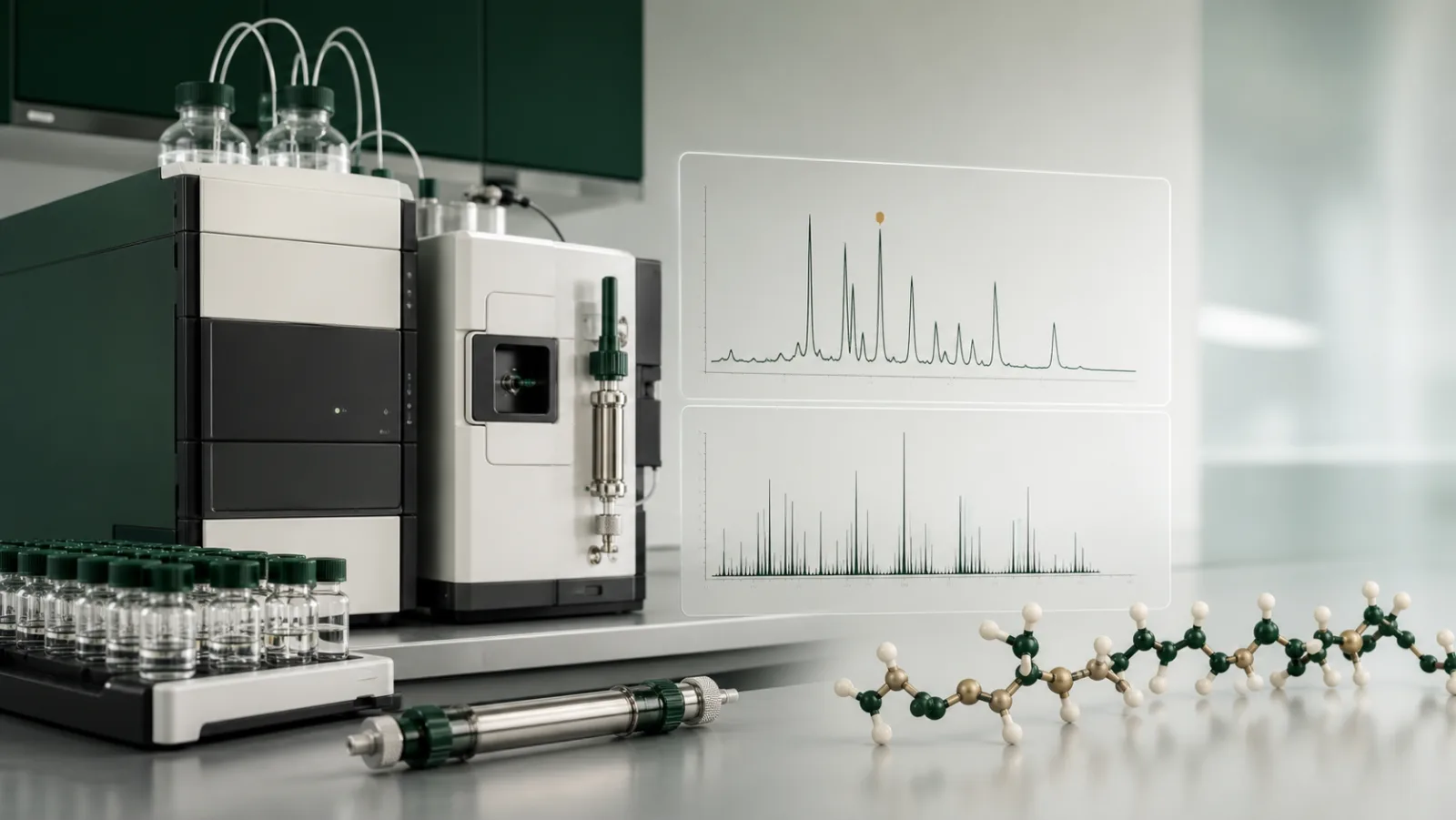
LC-MS can support molecular identity by comparing observed and theoretical mass. HPLC can describe the relative area of resolved, detected chromatographic components. The mass result does not prove chromatographic purity, and HPLC retention time does not by itself prove sequence. Strong documentation treats them as orthogonal tests.
Look for observed values, method references and acceptance criteria. The words conforms or passes are weak when the specification and numerical result are hidden. Chromatograms and spectra should carry the lot or sample identifier and be legible enough to review.
Which mass-related fields are often missing?
Gross vial fill, chromatographic purity and peptide content are different. Water, residual solvents, counter-ions and salts can make up part of the material mass. Quantitative experiments need to know whether the stated amount is weighed powder, calculated peptide-equivalent content or an assigned value from a validated assay.
The certificate should state salt or counter-ion form and quantify it when it materially affects the intended use. A molecular weight should specify the form on which it is based. This prevents a precise molarity calculation from being built on an undefined mass convention.
When do biological quality fields matter?
Endotoxin, bioburden and sterility are relevant to different models and are not interchangeable. A cell or immune assay may require a numerical endotoxin limit and method-suitability evidence. An analytical reference may prioritize content assignment and impurity characterization. The COA is useful only in relation to a predefined material requirement.
No research certificate establishes clinical safety, efficacy or authorization. In Canada, those questions belong to the appropriate Health Canada framework and authorized product records, not to a supplier chromatogram.
What happens after certificate review?
At receipt, confirm packaging integrity, lot, quantity and temperature evidence where required. Record any discrepancy before use. Assign an internal identifier and connect every aliquot and result back to the supplier lot. If risk is high, perform incoming identity, purity or content testing under the laboratory quality system. The COA begins traceability; it does not replace it.
Continue through the evidence
Methods and quality. HPLC Peptide Purity: How to Read a Chromatogram Without Overclaiming, LC-MS for Peptide Identity: Molecular Mass, Charge States and Sequence Evidence, Endotoxin and Bioburden in Peptide Research: Matching Tests to the Model, Peptide Content Versus Purity: Why Net Mass Changes Quantitative Experiments, Peptide Counter-Ions: TFA, Acetate and Their Experimental Consequences and Peptide Disulfide Bonds, Oxidation and Analytical Confirmation.
Canadian research context. Peptide Research in Toronto: An Evidence-Led Laboratory Map.
Connected peptide briefings. Peptide COA and SDS Review: A Canadian Procurement Checklist, Research Peptides in Canada: A Laboratory Procurement Guide, Health Canada, Peptides and Research Use Only: What the 2026 Guidance Means, Shipping and Storing Research Peptides Across Canada and Retatrutide, Tirzepatide and Semaglutide: How to Compare the Research.
Sources and further literature
- USP: Reference standards to support quality of synthetic peptide therapeuticsReview of identity, purity, content, counter-ion and strength testing.
- ICH Q2(R2): Validation of Analytical ProceduresInternational framework for analytical procedure validation.
- FDA: Analytical Procedures and Methods Validation for Drugs and BiologicsOfficial guidance on method development, validation and lifecycle management.
North Specs separates scientific education from product claims. Review primary literature, current regulations and institutional requirements before designing laboratory work.