Direct answer
A Manitoba research guide connecting peptide and myokine biology, analytical methods, Winnipeg institutions and responsible material procurement.
- Manitoba peptide-related research includes myokines, immunology, metabolism and analytical characterization.
- A regionally useful protocol accounts for shipment distance, winter exposure and the actual stability evidence for the material.
- Winnipeg laboratories should preserve lot, receiving and aliquot records from procurement through analysis.
Where do peptides appear in Manitoba research?
Peptide biology in Manitoba can be found within immunology, metabolism, exercise science, microbiology and clinical research. Myokines are a useful example because the term covers proteins and peptides released by muscle in response to contraction. Researchers must distinguish endogenous biomarker measurement from experiments that add a synthetic peptide to a model.
University of Manitoba laboratory descriptions show interest in myokine responses across exercise, aging and recovery. These questions require careful timing, specimen handling and assay validation. A regional research page should therefore emphasize experimental design rather than implying that a catalogue product recreates a complex physiological response.
Which methods are relevant to Winnipeg laboratories?
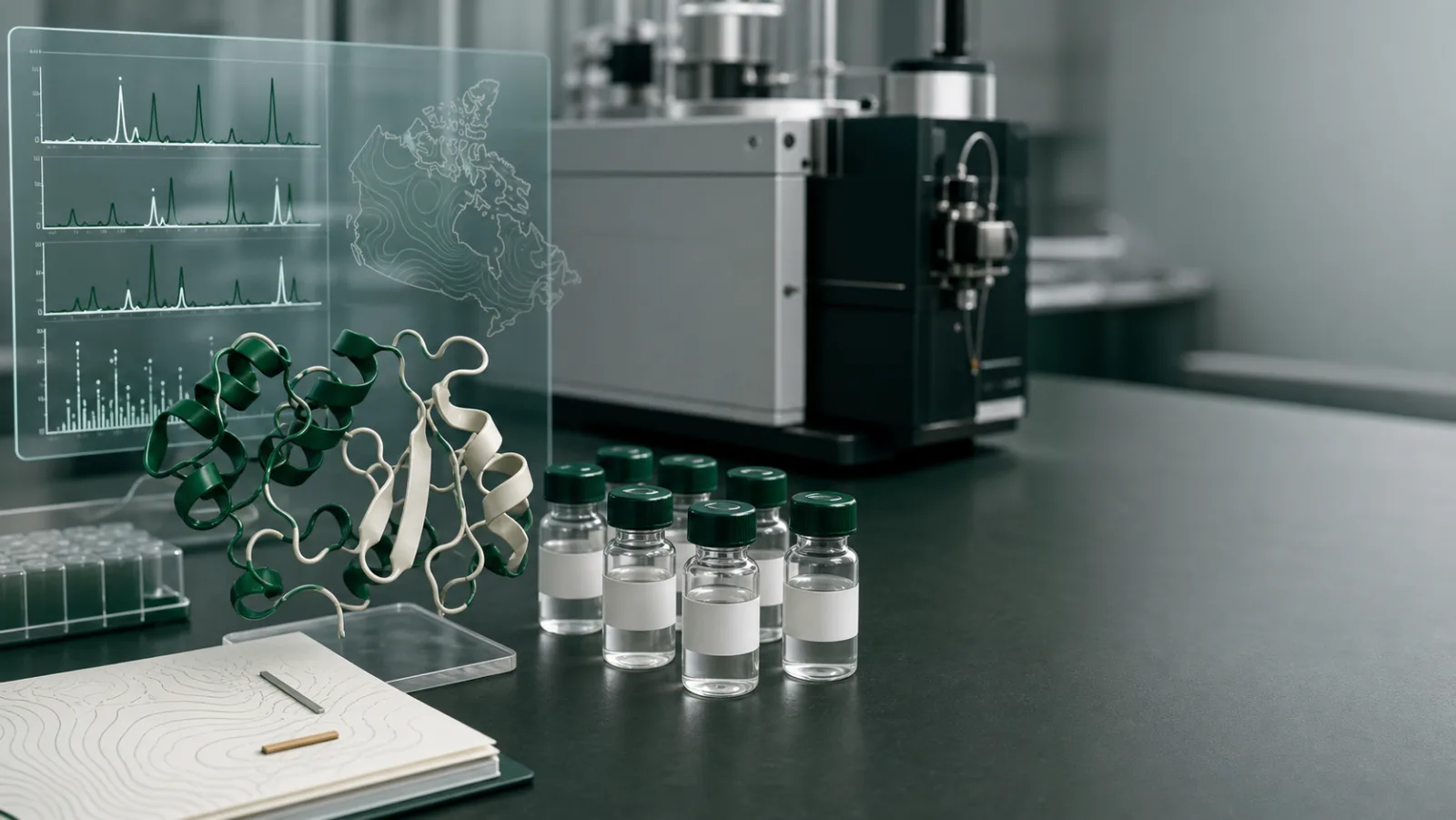
Immunoassays can measure selected endogenous peptides, while targeted mass spectrometry may improve molecular specificity. Cell models can test signalling hypotheses, and proteomics can identify broader response patterns. Each method has different interference, calibration and matrix constraints. The project should define whether it needs discovery, confirmation or quantitation.
For a synthetic research material, confirm identity and purity independently of the biological readout when the risk justifies it. For an endogenous analyte, validate collection tubes, processing delay and freeze-thaw tolerance. Combining these questions without a written sample plan invites false biological conclusions.
Does Manitoba shipping require a different plan?
Long routes and seasonal extremes make receiving records important, but they do not justify generic temperature claims. A lyophilized peptide may tolerate transit differently from a prepared solution. The laboratory should use supplier stability information, internal studies or literature relevant to the actual sequence and formulation.
At receipt, move the material into controlled storage promptly and record any obvious excursion or damage. Avoid repeated freeze-thaw by planning aliquots around the experimental schedule. The internal record should state the concentration basis and container type.
How should procurement fit institutional controls?
Vendor approval, purchase authorization, biosafety review and chemical inventory practices vary by institution. Obtain approval before ordering, not after the parcel arrives. The person designing the study should be able to explain why the material grade and test package are appropriate for the model.
Health Canada requirements do not change by province. Research Use Only wording must correspond to genuine laboratory use, and content should not make therapeutic promises or invite personal administration. A local supplier relationship is useful only when it improves traceability and support.
What makes a reproducible Manitoba study?
Reproducibility comes from linking the biological question to the sample record, controls, analytical method and raw data. Publish enough detail about the peptide form, lot, preparation and acceptance criteria for another laboratory to understand the experiment. Regional visibility then supports collaboration rather than search-engine repetition.
Continue through the evidence
Methods and quality. Peptide Experimental Controls: Vehicle, Scrambled Sequence and Reference Ligands, How to Read a Peptide Certificate of Analysis, HPLC Peptide Purity: How to Read a Chromatogram Without Overclaiming and LC-MS for Peptide Identity: Molecular Mass, Charge States and Sequence Evidence.
Canadian research context. Research Peptides in Thompson, MB: A Laboratory Guide, Research Peptides in Prince Albert, SK: A Laboratory Guide, Research Peptides in Prince George, BC: A Laboratory Guide and Research Peptides in Greater Sudbury, ON: A Laboratory Guide.
Connected peptide briefings. Research Peptides in Canada: A Laboratory Procurement Guide, Peptide Freeze-Thaw Stability: Designing a Defensible Study, Health Canada, Peptides and Research Use Only: What the 2026 Guidance Means and Shipping and Storing Research Peptides Across Canada.
Sources and further literature
- University of Manitoba Musculoskeletal Exercise Immunology LaboratoryResearch includes myokine responses, aging and exercise immunology.
- Health Canada: Regulating health productsOverview of authorization, monitoring and compliance.
- USP: Reference standards to support quality of synthetic peptide therapeuticsReview of peptide identity, purity, counter-ion and strength testing.
North Specs separates scientific education from product claims. Review primary literature, current regulations and institutional requirements before designing laboratory work.