Direct answer
A retrospective analysis of why thymosin alpha-1 entered COVID-19 research discussions in 2020 and what the early observational evidence could and could not show.
- WHO characterized COVID-19 as a pandemic on March 11, 2020, when clinicians had little disease-specific treatment evidence.
- Thymosin alpha-1 entered research discussions because of prior immunology and sepsis literature, not because efficacy had been established for COVID-19.
- Early retrospective cohorts were vulnerable to confounding by severity, timing, co-treatments and changing standards of care.
What was the research environment in March 2020?
When WHO characterized COVID-19 as a pandemic on March 11, 2020, laboratories and hospitals were working with rapidly changing definitions, limited testing and no mature treatment evidence. Many approved drugs and experimental immunomodulators were proposed from biological plausibility or prior disease models. Speed was necessary, but it increased the risk that uncontrolled observations would be treated as proof.
Canada responded by adapting clinical-trial review pathways while retaining the need for protocol, oversight and evidence. That regulatory context matters: urgent research did not erase the distinction between a hypothesis and an authorized treatment.
Why was thymosin alpha-1 considered?
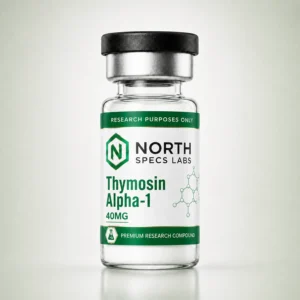
Thymosin alpha-1 is a 28-amino-acid peptide studied in immune modulation, including dendritic-cell, T-cell and innate-response contexts. Prior work in infection and critical illness made it a candidate for exploratory COVID-19 research. The hypothesis was that immune regulation might help selected patients, but COVID-19 biology changes across viral, inflammatory and recovery phases.
A plausible immune mechanism does not identify the right patients, timing or net effect. Stimulation could be helpful in one immune state and harmful or irrelevant in another.
What could early cohorts show?
Retrospective cohorts compared patients who had already received different care. Treatment allocation was influenced by severity, clinician judgment, hospital practice and availability. Statistical matching can reduce measured imbalance but cannot reproduce random assignment or control unknown confounders. Small subgroups and evolving co-treatments further limit certainty.
One 2020 report attracted interest but did not establish a clear mortality effect after adjustment. Such studies can identify safety signals, generate hypotheses and inform trial design. They cannot settle efficacy on their own.
How should the episode inform peptide research now?
Date every source, separate contemporaneous knowledge from later interpretation and preserve null findings. Use randomized designs when estimating treatment effects, and predefine immune subgroups rather than searching after outcomes. For laboratory work, authenticate material, control endotoxin and connect biomarkers to a mechanistic model.
This historical review is educational. It does not recommend thymosin alpha-1 for COVID-19 or any clinical condition. Product access here is restricted to legitimate laboratory research and must not be confused with medical supply.
Continue through the evidence
Methods and quality. Endotoxin and Bioburden in Peptide Research: Matching Tests to the Model, How to Read a Peptide Certificate of Analysis, HPLC Peptide Purity: How to Read a Chromatogram Without Overclaiming, LC-MS for Peptide Identity: Molecular Mass, Charge States and Sequence Evidence and Peptide Disulfide Bonds, Oxidation and Analytical Confirmation.
Canadian research context. Peptide Research in Manitoba: A Laboratory Methods Guide.
Connected peptide briefings. Thymosin Alpha-1: Immune Modulation Research, Canadian Clinical Trial Rules for Peptide Investigators, Research Peptides in Canada: A Laboratory Procurement Guide, Health Canada, Peptides and Research Use Only: What the 2026 Guidance Means, Shipping and Storing Research Peptides Across Canada and Ozempic in 2017: What the First FDA Approval Changed for GLP-1 Research.
Sources and further literature
- WHO timeline of the COVID-19 responseRecords the March 11, 2020 pandemic characterization and surrounding events.
- Health Canada accelerated access to COVID-19 clinical trialsMay 2020 federal announcement on clinical-trial review measures.
- Thymosin alpha-1 treatment in severe COVID-19: retrospective cohort2020 observational report; adjusted analysis did not establish a randomized treatment effect.
- Clinical retrospective study of thymosin alpha-1 in COVID-19Later peer-reviewed observational evidence for critical appraisal.
North Specs separates scientific education from product claims. Review primary literature, current regulations and institutional requirements before designing laboratory work.