Direct answer
A method-first comparison of semaglutide, tirzepatide and retatrutide that separates receptor design, trial populations and regulatory status.
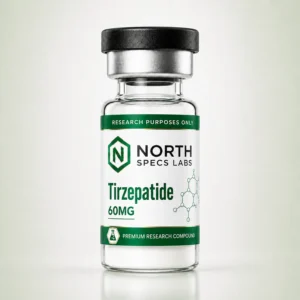
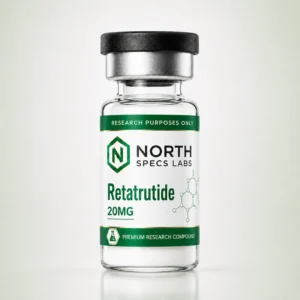
- Semaglutide targets GLP-1R, tirzepatide targets GIPR and GLP-1R, and retatrutide targets GIPR, GLP-1R and GCGR.
- Percent changes from separate trials should not be ranked as if populations, doses and protocols were identical.
- Semaglutide and tirzepatide have authorized medicine products; retatrutide remains investigational in the reviewed evidence.
What is the simplest scientific distinction?
The three molecules differ in receptor design. Semaglutide is a GLP-1 receptor agonist. Tirzepatide activates GIP and GLP-1 receptors. Retatrutide is designed to activate GIP, GLP-1 and glucagon receptors. The receptor count is not a quality score. The balance, exposure and endpoint determine the biological result.
All three are modified, long-acting peptides. Their lipidation, albumin association and sequence features mean that free concentration and assay recovery can differ. A fair laboratory comparison uses matched conditions, not only equal nominal mass.
Why are cross-trial rankings unreliable?
STEP 1, SURPASS-2 and the retatrutide phase 2 trial enrolled different populations, used different comparators, doses, titration schedules, durations and statistical plans. A larger percentage in one paper does not prove that its molecule would outperform another in the same controlled setting.
Active-comparator trials provide stronger comparative evidence for the tested doses and population. Even then, researchers should inspect open-label versus blinded design, missing-data handling, adherence and endpoint definitions before generalizing.
How does regulatory maturity differ?
Semaglutide and tirzepatide have authorized products in the United States and Canada. Retatrutide remains within clinical development in the evidence summarized here. This distinction affects what can be claimed, supplied and used. An investigational compound should not be described as an approved medicine because a phase 2 result appears promising.
Approved status also belongs to a product and indication, not to every vial containing the same nominal sequence. Research catalogue materials remain separate from prescription products.
What would a fair laboratory comparison look like?
Test each ligand in the same receptor-expressing cell background with validated reference agonists. Measure GLP-1R, GIPR and GCGR separately, then consider a co-expression model if biologically justified. Keep albumin, incubation, plate type and readout amplification consistent. Confirm material content and recovery.
Report full curves, not one concentration. A molecule may differ in potency, maximal response or signalling pathway preference. The most informative comparison identifies which feature explains an endpoint rather than announcing a winner.
How should researchers communicate the comparison?
Use a table that separates receptor targets, evidence stage, approved status and study design. State when numbers come from different trials. Avoid consumer language such as strongest or best unless a defined head-to-head experiment supports it. The comparison should help design research, not promote self-experimentation.
Continue through the evidence
Methods and quality. Receptor Bias and Potency in Incretin Peptide Research, How to Read a Peptide Certificate of Analysis, HPLC Peptide Purity: How to Read a Chromatogram Without Overclaiming, LC-MS for Peptide Identity: Molecular Mass, Charge States and Sequence Evidence and Albumin Binding and Acylated Peptides: A Research Methods Guide.
Connected peptide briefings. Semaglutide: From Peptide Engineering to FDA and Health Canada Milestones, Tirzepatide and Dual GIP/GLP-1 Receptor Agonism, Retatrutide: What Triple-Agonist Research Shows So Far, Research Peptides in Canada: A Laboratory Procurement Guide, Health Canada, Peptides and Research Use Only: What the 2026 Guidance Means, Shipping and Storing Research Peptides Across Canada and Incretin Research: GLP-1, GIP and the Move to Multi-Receptor Agonists.
Sources and further literature
- STEP 1: Once-weekly semaglutide in adults with overweight or obesityRandomized controlled trial, New England Journal of Medicine, 2021.
- SURPASS-2: Tirzepatide versus semaglutide once weeklyPhase 3 randomized trial, New England Journal of Medicine, 2021.
- Retatrutide for obesity: Phase 2 trialRandomized phase 2 trial, New England Journal of Medicine, 2023.
- Tirzepatide compared with semaglutide for obesityPhase 3b active-comparator trial published in 2025.
North Specs separates scientific education from product claims. Review primary literature, current regulations and institutional requirements before designing laboratory work.