Direct answer
How to study MOTS-c across cellular metabolism, stress signaling and animal models while controlling for sequence, localization and assay context.
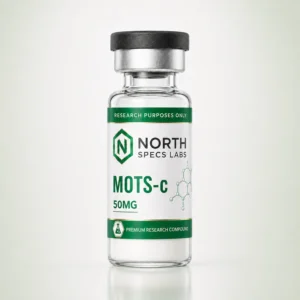
- MOTS-c emerged from research on short open reading frames in mitochondrial RNA and proposed metabolic signaling.
- Cell line, nutrient state, stress condition, peptide recovery and endpoint timing can change the observed phenotype.
- Claims about whole-organism effects require independent model-specific evidence and do not establish clinical use.
What is the scientific origin of MOTS-c?
MOTS-c was reported as a peptide encoded within mitochondrial 12S rRNA and studied as a regulator of metabolic homeostasis. The foundational work linked the peptide with folate and purine pathways, AMPK-related signaling and metabolic phenotypes in experimental systems. It contributed to a broader concept that mitochondrial genomes may yield bioactive short peptides beyond the canonical respiratory proteins.
The discovery paper is a starting point, not a complete mechanism. Sequence translation, endogenous abundance, localization and receptor or uptake pathways require distinct evidence.
Which cell models are most informative?
Choose a model based on the pathway and verify that the relevant transport and metabolic machinery are present. Nutrient composition, glucose, serum, oxygen and cell density can alter AMPK, stress and mitochondrial readouts independently of peptide. Use time courses that distinguish an early signaling change from secondary adaptation.
Include vehicle, a defined sequence control and pathway perturbations. Confirm viability, because reduced cell number can masquerade as altered metabolite consumption or mitochondrial signal.
How should peptide exposure be verified?
Authenticate the sequence and report content-corrected concentration where available. Assess recovery from dilution vessels and culture media, particularly at low concentrations. If the hypothesis depends on nuclear or mitochondrial localization, use validated localization methods with contamination controls rather than relying on fluorescence alone.
Endogenous measurement is technically difficult because short peptides can be lost or misidentified. Targeted mass spectrometry should use suitable standards, retention evidence and interference controls.
How should animal findings be interpreted?
Animal studies need randomized allocation, blinded outcomes, prespecified endpoints and transparent exclusions. Metabolic phenotypes are sensitive to strain, sex, diet, housing and handling. A change in one model should not be converted into a claim about people. Health Canada lists MOTS-C in its 2026 warning concerning unauthorized peptide products, reinforcing the separation between research evidence and personal use.
Continue through the evidence
Methods and quality. Peptide Dose-Response Curves: EC50, Emax and Assay Design, How to Read a Peptide Certificate of Analysis, HPLC Peptide Purity: How to Read a Chromatogram Without Overclaiming, LC-MS for Peptide Identity: Molecular Mass, Charge States and Sequence Evidence and Endotoxin and Bioburden in Peptide Research: Matching Tests to the Model.
Connected peptide briefings. Mitochondrial-Derived Peptides: MOTS-c, Humanin and the Microprotein Field, Low-Binding Tubes and Peptide Adsorption: Preventing Invisible Sample Loss, Research Peptides in Canada: A Laboratory Procurement Guide, Health Canada, Peptides and Research Use Only: What the 2026 Guidance Means, Shipping and Storing Research Peptides Across Canada, BPC-157 Research: Evidence Gaps and Replication-First Study Design and CJC-1295 With DAC: Albumin Binding and Growth Hormone Axis Research.
Sources and further literature
- MOTS-c is a mitochondrial-encoded regulator of metabolic homeostasis2015 foundational report describing the peptide and metabolic phenotypes.
- Health Canada: Think twice before injecting peptides bought onlineApril 2026 federal warning about unauthorized peptide products.
- ICH Q2(R2): Validation of Analytical ProceduresFramework for fit-for-purpose analytical procedures.
North Specs separates scientific education from product claims. Review primary literature, current regulations and institutional requirements before designing laboratory work.